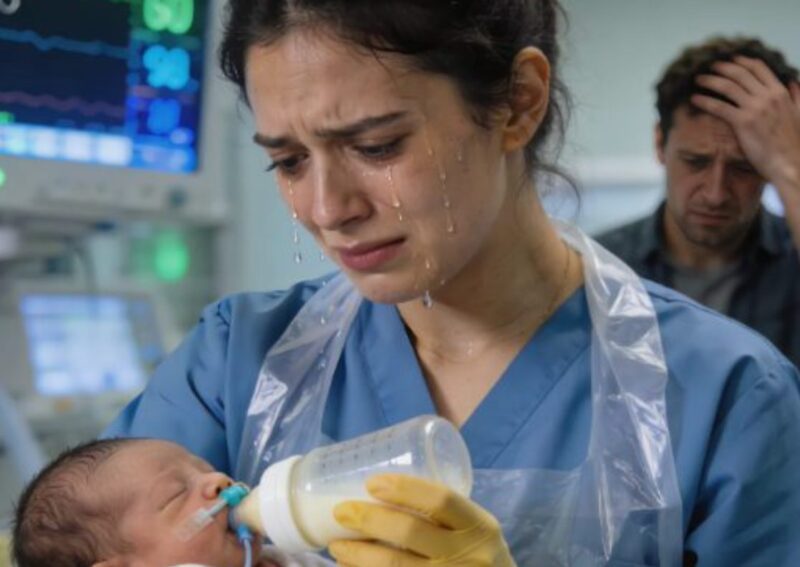
The baby’s condition suddenly worsened, and no one knew how to act properly. But when the housekeeper approached and gave the baby something, something happened that shocked everyone.
In the newborn intensive care unit of the hospital, there was a heavy, cold silence. The doctors’ eyes were full of despair. The baby was born prematurely, with severe breathing problems.
His lungs had not fully expanded, and his heart was functioning irregularly. Within the first few hours, the doctors warned the parents: the condition was extremely serious, with no guarantees.
In the morning, the baby’s mother suddenly became ill. After childbirth, her condition deteriorated, and she was in intensive care under medical supervision. The infant was connected to machines and given oxygen, but over the course of the day, his condition worsened further.
The monitor alarms sounded more frequently, and the nurses’ movements became increasingly urgent.
The father stood helplessly behind the glass wall. He didn’t understand the medical terms, but he understood the doctors’ silent glances. No one offered hope.
At that moment, their long-time housekeeper was beside them. For years, she had been an integral part of their home — more a family member than an employee. 😨😨
When the doctors left again, promising to do everything possible, the housekeeper quietly approached the nurse and whispered something. After that, she was allowed to enter and do what she requested.
Everyone froze when they saw her in the unit. The housekeeper entered with a bottle of milk in her hand and offered it to the newborn.
The doctors quickly ran to her, took the bottle, and tried to remove her from the room, because what she was doing was not allowed for newborns. And just seconds later, something happened that shocked everyone.
You can read the continuation in the first comment. 👇👇👇
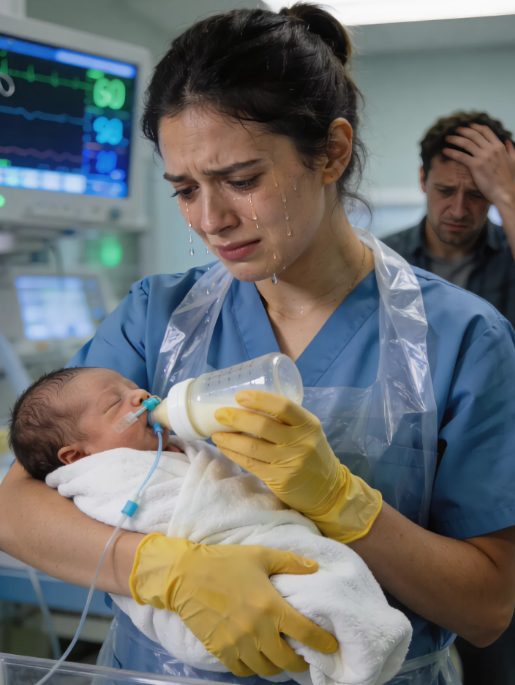
Everyone watched silently. At first, nothing changed. But after a few minutes, the heart rate on the monitor began to stabilize. The oxygen level slowly increased. One of the nurses urgently called the doctor.
A few hours later, the doctor approached the father — this time with a different expression on his face.
— We are still not out of danger, but the response is positive. His body has finally accepted nourishment.
The man sank into a chair, exhausted. Beside him, Maria quietly wept. That day, no one promised a miracle. But the baby fought. And for the first time, the doctors did not say: “There is no hope.”
A few days later, the child was already breathing independently. The doctors recognized that the care provided at the right moment and the correctly chosen formula had been decisive.
The man never forgot that day. And that moment when a woman — not as a housekeeper, but as a human being — stood beside them in despair and saved the future of their family.